
Fjätervålen | Lillfjäten | Storfjäten
Rybäckskojan
7 km on skis from Fjätervålen
Rybäckskojan is a small rest hut with a stove located along Fjället runt. The hut is open to everyone, but overnight stays are not permitted.
You can get here on cross-country skis or touring skis. If you are touring, you can continue from here to Städjan or towards Foskdalsvallen.
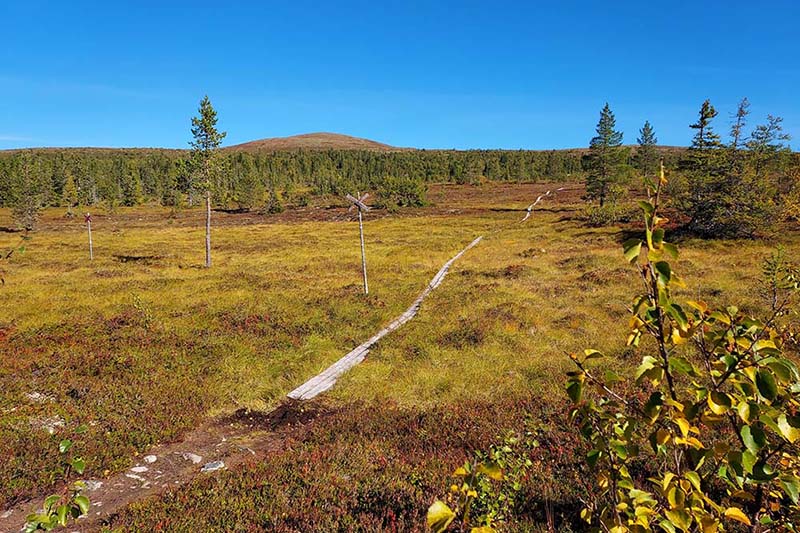
In summer, you can hike here from Fjätervålen or Städjan and continue to Ulandsstugan.
Lilla Fjätfallet
4 km from Fjätervålen
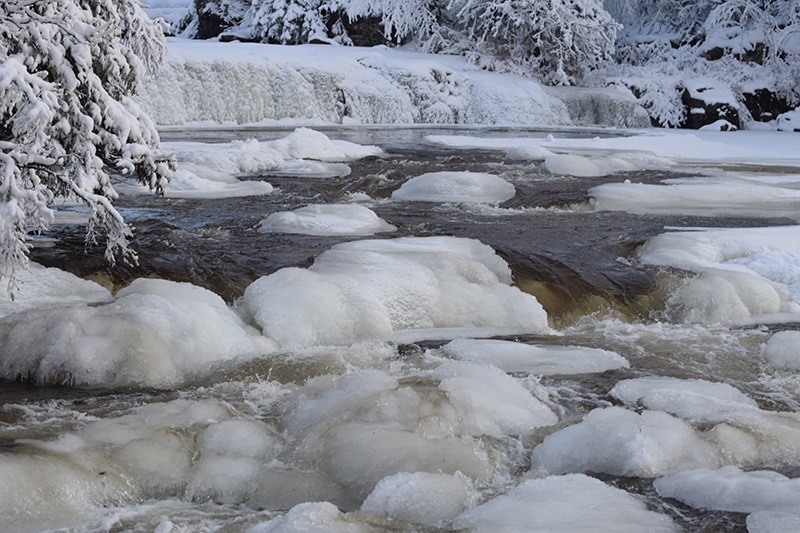
South of Fjätervålen, a magnificent waterfall spreads out, where a suspension bridge stretches across the river and leads to a charming rest area with barbecue facilities next to the waterfall. This is an idyllic destination for excursions in both summer and winter. When winter takes hold of the area, most of the rapids freeze over, but despite this, the place retains its incredible beauty and tranquility. The beautiful surroundings and frozen landscape create a peaceful atmosphere that makes the place attractive all year round.
How to get there
In summer, you can drive all the way there, taking the exit from road 311, signposted “Fjätfallet.” The road is not plowed in winter, but we highly recommend traveling under your own steam all the way from Fjätervålen. Follow the snowmobile trail south on cross-country skis or on foot. Eventually, you will reach a sign where you continue towards Fjätfallet.
Cross-country skis are available for hire from us in Fjätervålen.
Övre Fjätfallets vänner (Friends of Upper Fjätfallet) is a non-profit association that has done a fantastic job for this place. Among other things, they have financed the beautiful suspension bridge. Please support their work by donating any amount you wish to 123 634 07 72. For only SEK 100/year, you can become a member.
Stora Harundsjön
15 km from Fjätervålen
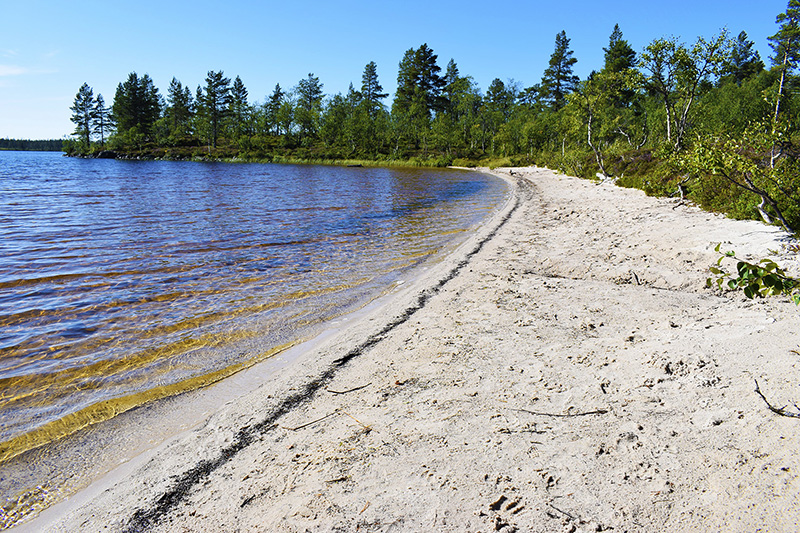
Stora Harundsjön is beautifully situated in the Städjan-Nipfjället nature reserve, only 15 km from Fjätervålen. There is a lovely swimming lake here, as well as fishing opportunities for those who wish to fish. The lake is part of the Särna-Idre fishing conservation area.
In summer, the lake offers fantastic paddling for those who want to enjoy the area from the waterline.
Bring your SUP, kayak, or canoe and spend a whole day at the lake swimming and playing, or why not bring your tent for an overnight stay?
It is also possible to book an overnight cabin by the lake through the County Administrative Board.
Städjan | Nipfjället
27 km from Fjätervålen
This nature reserve consists of a large mountain massif with the peaks Fjätervålen, Städjan, and Nipfjället. The area is also a Natura 2000 site. There is a road up to Nipfjället and a parking lot at the foot of Städjan in Gränjesåsvallen. The reserve has many marked trails and paths so you can easily reach the peaks.
Work is underway to improve the trails that run from Fjätervålen to Städjan and Nipfjället.
Before the large parking lot in Fjätervålen, the County Administrative Board has an information board about the nature reserve.
Read more about the reserve and what applies at lansstyrelsen.se
Nipstugan & Nipfjället
You can visit here in both summer and winter. The famous Trollvägen trail runs between the summer and winter parking lots; see more under Trollvägen.
Nipstugan, a rest hut in the reserve, is located by the winter parking lot. In summer, you can drive all the way to the summer parking lot and easily take a trip up Lillnipen, a trip that is suitable for families with children and beginners. Around Nipfjället there are several hiking trails in summer and also some winter trails. A fantastic area for skiing or hiking. There are several rest huts along the trails.
How to get here
Turn right onto road 311 and then turn right towards Städjans fjällby/Idrefjäll. At the Idre/Nipfjället junction, turn right towards Nipfjället and continue towards the summer/winter parking lot.
Vedungsfjällen
10 km from Fjätervålen (to Morvallarna)
On the border between Dalarna and Härjedalen, the Vedungsfjällen mountains stretch out across the horizon. There are marked summer and winter trails here, as well as several unmarked paths. A gem in both summer and winter. Here you can enjoy beautiful summit tours or ski through the nature reserve. In summer, you can hike and spend the night in one of the county council’s cabins or in your own tent.
Trollvägen
27 km from Fjätervålen
The road between the summer and winter parking lots is called Trollvägen. If you stop your car at the signposted spot, disengage the clutch, and release the brake, the car will start rolling uphill! A strange experience and one of Sweden’s most famous optical illusions. Well worth trying if you are in the area.
How to get here
Turn right onto road 311 and then turn right towards Städjans fjällby/Idrefjäll. At the Idre/Nipfjället junction, turn right towards Nipfjället and continue towards the summer car park.
Städjan
18 km from Fjätervålen
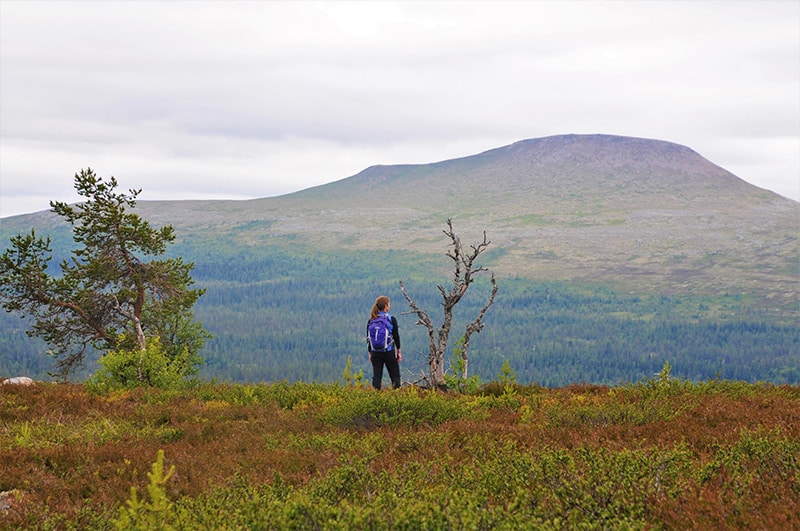
Städjan, with its magnificent character in the Dalarna mountains, is a must-visit if you are in the area during the summer.
From the Städjan car park, you can take a moderately difficult half-day hike of 6 km that takes you to the top of Städjan.
During the winter months, Städjan is a popular area for summit tours, either on your own or with a guide. Read more about guided summit tours with Lars Svanerud.
How to get there
Turn right onto road 311 and then turn right again at Städjan’s mountain village. Once you have passed through Städjan’s mountain village, there is a sign for parking on the right-hand side.
At the foot of Nipfjället you will find this beautiful mountain lake. There are rest areas and rest huts along the lake. A very popular fishing lake where char is stocked and there is a good supply of perch as well as some trout and pike. In winter, you can ice fish on the ice.
How to get here
Turn right onto road 311 and then turn right towards Städjan mountain village/Idrefjäll. At the Idre/Nipfjället junction, turn right towards Nipfjället, take the second road on the left and continue to the end of the lake, where you will find parking and a rest hut with an outdoor toilet.
Fulufjället
Njupeskär Waterfall
59 km from Fjätervålen
Njupeskär is one of Sweden’s highest waterfalls. The waterfall is 93 meters high with a drop of about 70 meters. There is a unique flora here that survives thanks to the constant moisture around the waterfall.
In summer, you can get here on foot. During winter, the trail to the waterfall is closed due to the risk of snow and ice falls and, later in winter, avalanches.
During winter, you can ski or snowshoe on your own or with a guide in the national park, but not all the way to the waterfall.
It is a hike of about 2 km one way to the waterfall from the parking lot. The hiking trail starts from the parking lot at Naturum Fulufjället. Along the way, there are several barbecue areas and hiking trails. Toilets and outhouses are available at Naturum and along the trail to the waterfall.
Fulufjället Nature Center / Fulufjället National Park
Fulufjället Nature Center is located at the main entrance to the national park and is one of Sweden’s 32 nature centers.
Here you can view exhibitions about the national park, obtain information, and take guided tours.
Fulufjällets National Park is always open. The road up to the parking lot and nature center is plowed in winter. Njupeskärsserveringen is only open from June to September.
For current opening hours at Naturum Fulufjället, see their website.
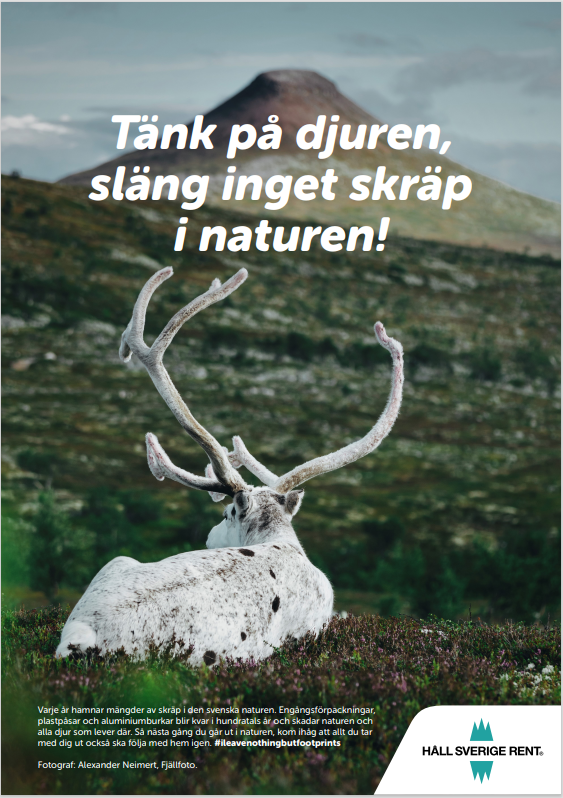
Take care of our beautiful natur
Leave as few traces as possible
- Take home everything you bring with you.
- Litter breeds litter, so always bring a trash bag with you.
- Avoid disposable items.
- Leave unnecessary packaging at home.
- Leave the place as you would like to find it yourself.
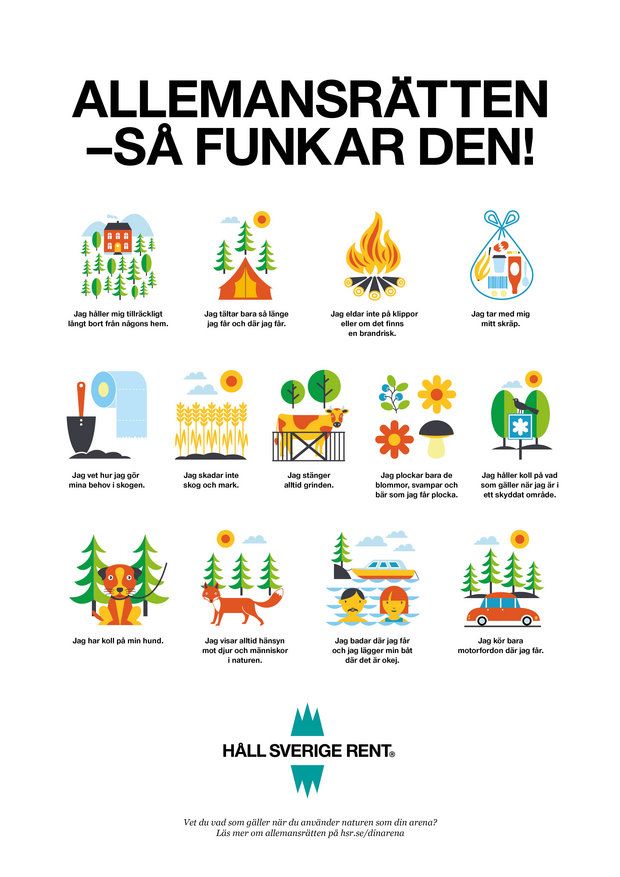
The public right
In Sweden, everyone is allowed to be in nature, even in areas owned by someone else. This
is called everyman’s right. It is a right that also entails a responsibility. We can
summarize it as not disturbing or destroying
Hiking, cycling, or horseback riding
You are allowed to hike, cycle, or ride horses in nature. However, you are not allowed to pass through plots of land,
forest plantations, fields, or other land with crops. Plots of land are the areas near
farms and residential buildings where the residents have the right not to be disturbed. If you cross a pasture, you must be careful to close the gates behind you. Avoid cycling
or horse riding on paths where the terrain is soft and the ground is sensitive. You are not allowed to ride in marked or groomed ski trails.
Motor vehicles and private roads
You are not allowed to drive a car, motorcycle, or moped on land that is not covered with snow.
This applies to all land, including paths, park roads, and exercise trails. You are only allowed to
drive a snowmobile if there is no risk of damaging the forest or the ground under
the snow. In some areas, it is completely forbidden to drive snowmobiles except on trails
intended for snowmobiles. It is also not permitted to drive motorized vehicles
on private roads that are closed to motor traffic. Such prohibitions must be
marked with road signs. It is permitted to hike and cycle on private roads.
Tents and caravans
You may camp in the wild for one night. To camp for longer than one night in the same place or
with several tents, you must obtain the landowner’s permission. You must also obtain permission to
park your caravan along a private road. It is not permitted to drive a
motorhome or caravan off-road, for example along a beach or in a field.
On the water
You may go boating, anchor and temporarily moor at the beach, go ashore and swim at
the beaches, except in the vicinity of residential buildings. Please note that there are
bird sanctuaries and other protected areas where it may be prohibited to
go boating or go ashore. These areas are marked with signs.
Fishing
You may fish freely with a rod and certain other hand tools along the coasts and in our
five largest lakes. However, to fish in other lakes, you need a fishing license or other
permit. Free fishing does not include net fishing, angling, trolling, or drag rowing.
Dogs
Leave animal nests and young animals alone. It is forbidden to disturb or harm wild
animals. Between March 1 and August 20, while the animals have young, dogs are not allowed to
run loose in nature. During the rest of the year, you must keep your dog under supervision
while you are out in nature. In many outdoor recreation areas, it is
common for dogs to be kept on a leash.
Fire
During the summer, fire bans are common. This means that all open fires
are prohibited, even in designated fire pits. At other times, it is permitted to light
a fire if you do so with great caution and ensure that the fire is
extinguished. Do not light fires directly on rock surfaces – they will crack.
Berries, mushrooms, and flowers
You may pick berries, mushrooms, and flowers that are not protected. However, it is
prohibited to cut down trees and bushes without permission, break branches and twigs, remove
bark, or otherwise damage trees.
Take your rubbish with you
It is forbidden to throw away or leave rubbish in nature. Broken glass, empty cans,
plastic, fishing line, or other rubbish spoil the experience of nature and can harm both
people and animals.
Protected nature
In protected nature areas, such as national parks and nature reserves, special rules apply that
may restrict the right of public access. Local rules may also apply in other places, such as
recreational areas.
You can read more about the right of public access, including what you are and are not allowed to do, at Naturvårdsverket.se.

